
The Revolut outage: why you need a backup bank
A power fault at a Google Cloud data centre left millions of UK customers unable to pay or withdraw cash for much of Tuesday. The case for a second bank in a second country has rarely been clearer.
Read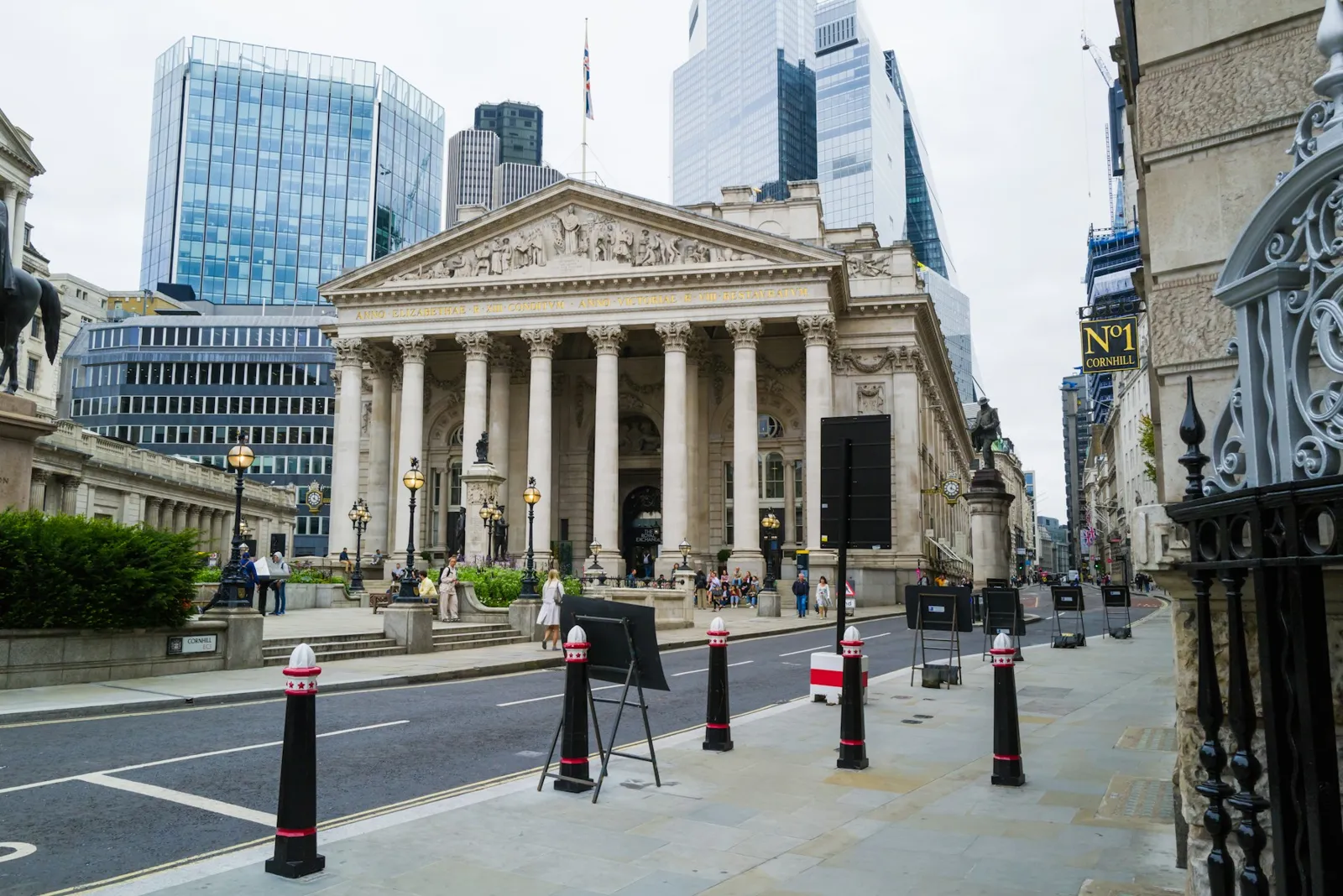
Home / International banking
ServicesA residency or a company is only useful if you can bank where you live and where you do business. We match you with the right banks, prepare your file the way they expect it, and introduce you to the banks we work with. We can also help you build a US credit score and hold the best US travel cards, without living there.
Offshore banking no longer means secrecy from tax authorities. Under the Common Reporting Standard, the system banks use to share account details with tax authorities worldwide, and FATCA, its US equivalent, a Swiss or Singapore account is reported to wherever you are tax resident. Opening an account never changes where you pay tax.
What it does give you is resilience. Your money is spread across more than one country, so capital controls, a bank failure, a frozen account or a political shift at home cannot cut you off. You get access to strong, stable banks, accounts in several currencies, wealth management, lending against a portfolio, and privacy from the public.
Most clients need two or three of these, not all of them. Minimums are indicative and change often, so we confirm them with each bank before you apply.
| Type | Where | Rough minimum | Best for |
|---|---|---|---|
| Everyday | A local bank in each of your countries of residency, plus a leading multi currency account | None | Every client |
| Business | Banks and fintechs in the countries where your company is formed and does business (for example the US, the UAE or Hong Kong) | Low | Anyone running a company, whether we formed it or not |
| Backup | A second bank in a different country from your main one, chosen to suit your passports, residencies and currencies | Low | Staying paid if one account is frozen, a bank changes its policy or a system goes down |
| Expat banking | The offshore arms of large UK banks in the Channel Islands or the Isle of Man | Roughly £50,000 to £100,000 | People who want a familiar big name bank outside their home country |
| Private banking | Switzerland, Singapore or Liechtenstein | Roughly US$250,000 to US$1 million and up | Wealth management in the most stable jurisdictions |
| Asset protection | Banks in jurisdictions with strong asset protection laws, often alongside a trust or LLC | Low to moderate | People in professions where lawsuits are a real risk |
| Crypto friendly | Banks that accept crypto clients (for example in Switzerland, Panama or Gibraltar) | Varies | Clients with crypto wealth, including El Salvador applicants |
| Investing | International brokerages that accept non residents | Low | Anyone investing across global markets |
Our main banking jurisdiction. Business accounts for US companies, access to the US financial system and payment platforms, and a route into the US credit system and its travel rewards cards, all without living there.
No residency needed. Private banks usually expect CHF 250,000 to 1 million or more, plus annual fees. The benchmark for stability and multi currency wealth management. Many Swiss banks do not accept Americans.
Excellent and very stable, but non residents mostly get in through private or priority banking with high minimums.
Personal accounts for non residents are hard to get. For business accounts, specialist fintechs are usually easier than the large banks.
Remote opening, low minimums and US dollar accounts, which makes it one practical option for a backup account.
Well known UK banking brands for expats, held outside the UK. A natural fit for Britons and Australians.
A small banking sector with some of the strongest asset protection laws in the world.
Banks that work with crypto clients and offer premium cards, and that pair well with Panama residency and companies.
Local accounts come with residency and a free zone company. Slow to open, solid once you are in.
Some of the best residency countries for tax have weak banking. That is why we pair them with the United States, and especially the US credit system, which issues the best travel rewards cards in the world: points that pay for business and first class flights and hotels, airport lounge access, travel insurance and no foreign transaction fees. You do not need to live there or have a Social Security number to hold them. We help you build the credit history that gets you approved.
An Individual Taxpayer Identification Number, the US personal tax number for people without a Social Security number. It lets the US credit bureaus open a file in your name. Usually two to three months, and often set up alongside a US LLC.
With no US history yet, the first card is the hard part. We prepare your file and arrange an appointment at a major US bank, where the first card is usually opened in person during a short trip.
Small, regular spending paid in full every month. Within about six to twelve months most clients have a strong score, without debt or interest.
With a solid history you can apply for the top tier travel and rewards cards, and use their sign up bonuses and benefits wherever you live.
You will need a US address for statements and should use your real details on every application. Each bank makes its own credit decision and no one can guarantee approval or a particular score. Pay in full and on time: the aim is a strong history, not debt.
A power fault at a Google Cloud data centre left millions of UK customers unable to pay or withdraw cash for much of Tuesday. The case for a second bank in a second country has rarely been clearer.
Read
After more than six years on the EU’s tax blacklist, Panama moved to the lighter “state of play” annex on October 9. What the list is, why Panama was on it and what changes for companies, banks and residents.
Read
Moody’s raised Argentina by one notch on July 21 and turned its outlook positive. After Fitch in May and S&P in June, the three major agencies now agree on Argentina’s rating for the first time in over a decade.
Read
After nearly 20 months of restrictions, Revolut’s UK arm can now hold protected deposits and, in time, lend. For people outside the UK, and for anyone using it as their only account, the picture is more nuanced.
Read
From today, crypto exchanges in the UK, most of the EU and more than twenty other jurisdictions record who their users are, where they pay tax and what they trade. Tax authorities start swapping that data in 2027.
Read
From Monday, Argentines can buy dollars without the old monthly cap and the peso will float inside a band of 1,000 to 1,400 per dollar, backed by a new US$20 billion IMF program.
Read
Lawmakers voted 55 to 2 on January 29 to end the rule that businesses must accept bitcoin, meeting a key condition of a planned US$1.4 billion loan from the International Monetary Fund.
ReadYour residency, citizenships, company and the way money moves through your business.
Which accounts you actually need, where, and in which currencies.
Source of funds, company documents, references and translations, organised the way banks expect.
We introduce you to the bank and help with compliance questions until the account is open.
We do not open accounts ourselves, hold or move client money, or give investment advice. Every bank makes its own decision and no one can guarantee an account. Where tax or legal questions arise, our local teams of licensed professionals handle them.
Tell us where you are moving, what your company does and how you get paid. We will tell you which accounts make sense.
No cost and no obligation. Just a clear next step.