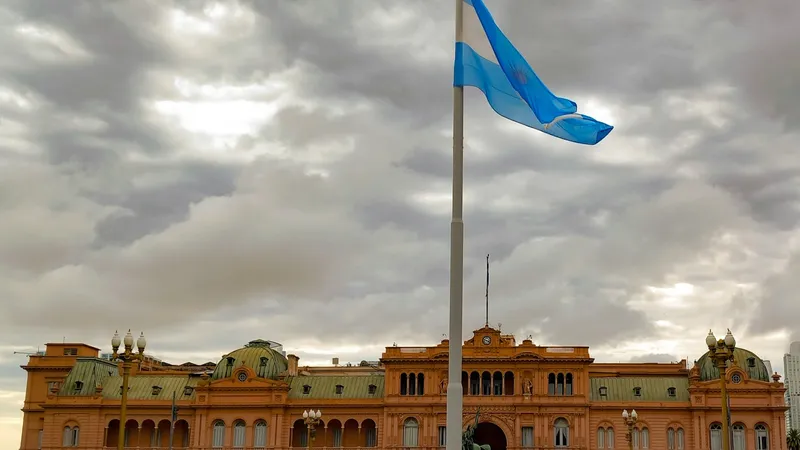
Argentina has taken the first formal step towards selling citizenship to investors. On May 29, 2025, the government of President Javier Milei published Decree 366/2025 in the Boletín Oficial, the official gazette where Argentine laws and decrees take effect. Among dozens of changes to the country's migration and citizenship rules, the decree creates a new category of citizen: a foreigner who makes what the text calls a "relevant investment" in the country.
It is a significant moment. No large South American country has run a citizenship by investment program before, and Argentina is one of the biggest economies in Latin America. But today's decree is a framework, not a product. Nobody can apply yet, and the most important detail, how much an investor would need to put in, has not been set.
What the decree says
The decree rewrites article 2 of Law 346, the citizenship law that has governed naturalisation in Argentina since 1869. Under the new text there are two ways for a foreigner to become a citizen by naturalisation:
- The residence route. Adults who have lived in Argentina continuously and legally for the two years before applying. The decree now defines "continuously" strictly: the applicant must not have left the country at all during that period.
- The investment route. Foreigners who show they have made a relevant investment in the country, "whatever the length of their residence". In plain terms, no period of living in Argentina is required.
The decree hands the Ministry of Economy the job of deciding which investments count as relevant, using objective criteria, and allows it to designate specific investment projects for the purpose. It also moves the power to grant naturalisation away from the federal courts, which have handled it for decades, to the Dirección Nacional de Migraciones, the national immigration authority.
A new agency to run it
The decree creates the Agencia de Programas de Ciudadanía por Inversión, the agency for citizenship by investment programs, as a decentralised body inside the Ministry of Economy. It will be led by an executive director with the rank of undersecretary, appointed by the President.
Its listed duties give a good sense of how the program is meant to work. The agency will design and promote the programs, receive applications, request background reports from the immigration authority, the Unidad de Información Financiera (Argentina's financial intelligence unit, which tracks money laundering) and any other relevant body, and then send a reasoned recommendation to approve or reject each case to the immigration authority, which makes the final decision. The agency must also publish, every year, the investments received through the program.
Part of a much larger migration reform
The investment route is a small part of a long decree. Presidential spokesman Manuel Adorni previewed the reform in mid May, and most of it tightens the rules rather than loosening them. Among other things, the decree:
- Expands the grounds for refusing entry to, or deporting, foreigners with criminal records or who use false documents.
- Limits free public healthcare for foreigners without permanent residency to emergencies, unless they have insurance or pay.
- Allows national universities to charge tuition to foreigners who are not residents.
- Redefines the categories of permanent, temporary and transitory residency.
The government's stated logic is that citizenship without residence should be limited, and reserved for people who bring capital and jobs. The decree's preamble says the measure will encourage investment and employment and help open Argentina to the world.
The decree is a DNU, a decreto de necesidad y urgencia, a form of emergency decree the Argentine President can issue with immediate force of law. It remains in force unless both chambers of Congress vote to reject it, and it can also be challenged in the courts. That is worth keeping in mind for any program built on it.
What we still do not know
Almost everything an investor would need to make a decision is missing:
- The amount. The decree sets no minimum investment. That is for the Ministry of Economy to decide.
- The form. It is not yet clear whether the program will take donations, government bonds, real estate, business investment or a mix.
- Family. There is nothing yet on whether spouses and children can be included, or on what terms.
- Process and timing. Implementing regulations, the application procedure, fees and a launch date have not been published, and the agency itself still has to be set up.
What it means if you are considering Argentina
An Argentine passport would be a genuinely useful second citizenship. It offers visa free travel to the Schengen area and the United Kingdom, and full rights to live and work across much of South America through Mercosur, the regional trade bloc. A route that does not require years of residence would open that to people who cannot relocate.
For now, the sensible course is to wait. There is nothing to apply for, and any offer to "reserve a place" or accept funds before the Ministry of Economy publishes its rules should be treated with caution. We are following the implementing regulations closely and will publish the details, including the investment amount and the role of the new agency, as soon as they are official.
If an Argentine passport is on your list, see our Argentina citizenship page for how the route is expected to work, or book a free call. We will tell you honestly how it compares with established programs in the Caribbean and Turkey while Argentina finalises its rules.
This article is general information, not legal, tax or investment advice.