
The Revolut outage: why you need a backup bank
A power fault at a Google Cloud data centre left millions of UK customers unable to pay or withdraw cash for much of Tuesday. The case for a second bank in a second country has rarely been clearer.
Read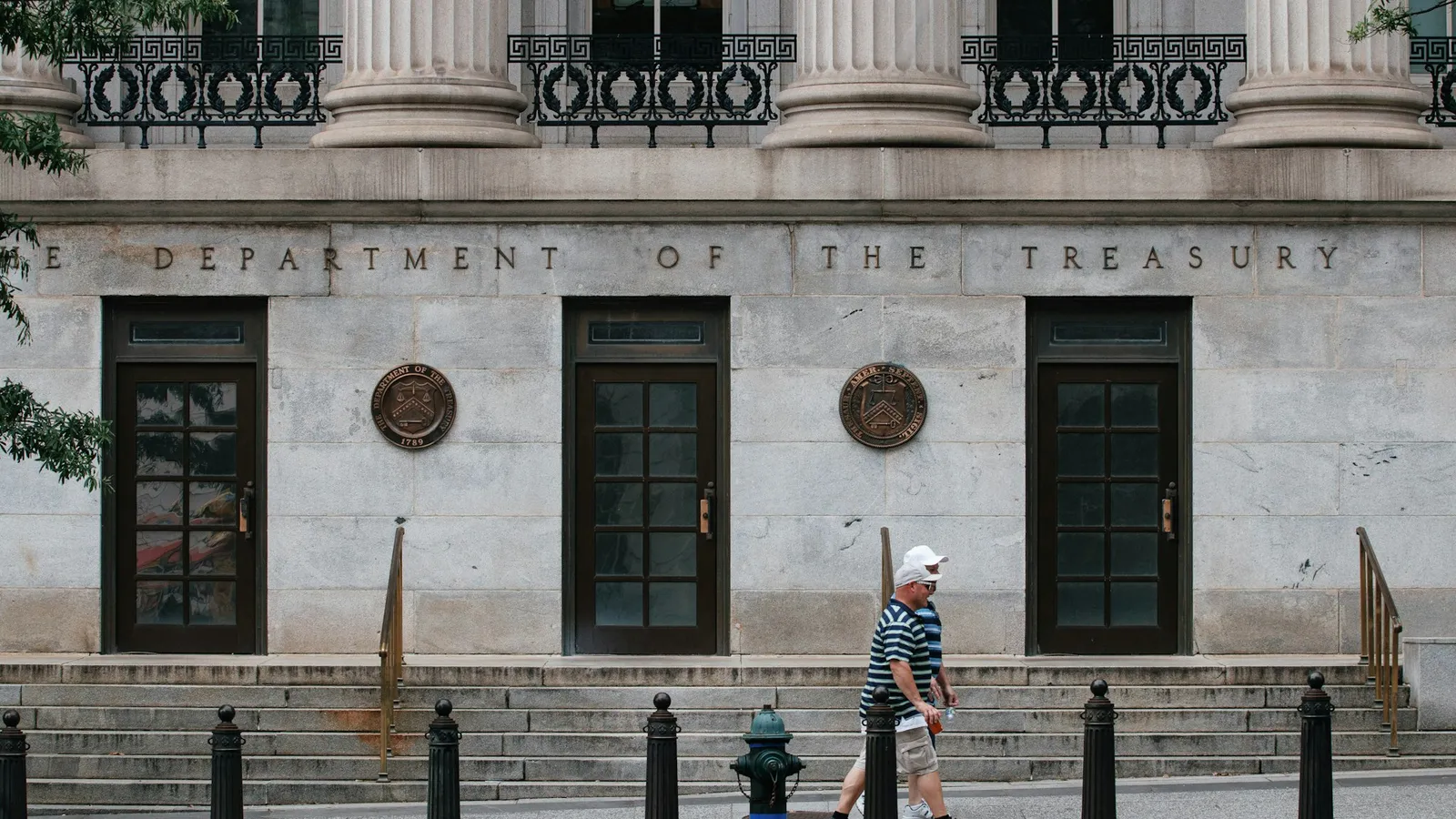
A new interim rule exempts every company formed in the United States from reporting its owners to FinCEN. Companies formed abroad and registered to do business in a US state still have to file.
Today, March 21, 2025, the Financial Crimes Enforcement Network, known as FinCEN, announced an interim final rule that removes beneficial ownership reporting for US companies and US persons. FinCEN is the bureau of the US Treasury that collects financial intelligence to fight money laundering. An interim final rule takes effect straight away while the agency collects public comments, and FinCEN says it intends to finalise this one later in 2025.
For anyone who owns a US LLC or corporation, including founders who live outside the United States, it ends more than a year of uncertainty.
The Corporate Transparency Act, passed by Congress in January 2021, required most small companies to tell FinCEN who really owns and controls them. The information went into a confidential federal database, not a public register, and was meant to make it harder to hide money behind anonymous shell companies.
A beneficial owner was any individual who owned or controlled at least 25% of a company, or who exercised substantial control over it, such as a senior officer. For each one, the company had to report a full legal name, date of birth, residential address and the number of an identity document such as a passport, along with an image of that document.
The rules took effect on January 1, 2024. New companies had to file within a set period after formation, and companies that already existed before 2024 had until January 1, 2025. FinCEN expected the requirement to reach tens of millions of entities, the great majority of them small businesses.
The months before today's announcement were unusually confusing:
Today's rule puts that March 2 statement into regulation.
The rule rewrites the definition of a reporting company. It now covers only entities formed under the law of a foreign country that have registered to do business in a US state or tribal jurisdiction by filing with a secretary of state or similar office. FinCEN previously called these foreign reporting companies. Every entity created in the United States, which FinCEN used to call a domestic reporting company, is now exempt, along with its beneficial owners.
Foreign reporting companies still have to file, but they do not have to report any US persons as beneficial owners. Those already registered to do business in the United States must file within 30 days of the rule being published in the Federal Register, the official journal of the US government. Those that register later get 30 calendar days from notice that their registration is effective.
This is the point that matters most for international founders, and it is easy to get wrong. The test is where the company was formed, not who owns it.
The rule does not change other obligations. Banks still ask for beneficial owner information when opening business accounts under their own customer due diligence rules, and the separate IRS filings that apply to foreign owned US LLCs are untouched.
For clients who hold or are considering a US LLC, the paperwork burden falls back to what it was before 2024: state filings, a registered agent, and federal tax filings where they apply. Clients who use a foreign holding company with a US branch or registration should check whether that registration makes it a reporting company, and file within the 30 day window if so.
Because this is an interim rule, it could still change before it is finalised. We help clients set up and maintain company structures with our local teams, and we will update clients as FinCEN completes the process.
This article is general information, not legal, tax or investment advice.

A power fault at a Google Cloud data centre left millions of UK customers unable to pay or withdraw cash for much of Tuesday. The case for a second bank in a second country has rarely been clearer.
Read
A final rule confirms that companies formed in the United States never have to report their owners to FinCEN, and orders deletion of data already filed about US persons.
Read
After nearly 20 months of restrictions, Revolut’s UK arm can now hold protected deposits and, in time, lend. For people outside the UK, and for anyone using it as their only account, the picture is more nuanced.
ReadThis is a big decision, and there is a lot of information to take in. That is why we start with a free 15 minute call: we look at your situation and your goals, then tell you which programs genuinely fit you, and which do not. We never push one program over another. If staying where you are is your best move, we will tell you that and sell you nothing.