
Dubai property after the Iran war: a buying window?
Prices have eased 5% to 15% since the end of 2025 and sales are down sharply, while the very top of the market keeps trading. A look at what the data shows, and the risks on both sides.
Read
Home / The Brief / United Arab Emirates
United Arab Emirates · Tax · · 5 minute readGroups with global revenue of EUR 750 million or more will pay at least 15% on UAE profits from 2025. Small companies, free zone start ups and the 9% corporate tax are untouched.
The UAE Ministry of Finance announced today, December 9, 2024, that it will introduce a domestic minimum top up tax, usually shortened to DMTT, for financial years starting on or after January 1, 2025. In plain terms, the largest international groups operating in the UAE will have to pay an effective tax rate of at least 15% on the profits they make in the country.
The headline sounds dramatic for a country known for low taxes. For almost every founder, freelancer and small business owner with a UAE company, it changes nothing. The new tax is aimed at a very small group of very large companies.
The DMTT covers multinational groups with consolidated global revenue of EUR 750 million or more, roughly US$794 million, in at least two of the four financial years before the year in question. A multinational group, for these purposes, is a group of companies with a presence in more than one country.
That threshold is not new or invented by the UAE. It comes from Pillar Two, the global minimum tax agreed through the OECD, the Organisation for Economic Cooperation and Development, based in Paris, with a large group of countries. Pillar Two says that big groups should pay at least 15% on their profits in every country where they operate. If a country taxes them at less than that, another country can collect the difference instead.
The UAE has decided it would rather collect that difference itself. A domestic top up tax means that if a large group's effective rate in the UAE falls below 15%, the shortfall is paid to the UAE rather than to the tax authority in the group's home country. The ministry said the UAE rules will closely follow the OECD's model rules, and that more details of the legislation will follow.
The UAE introduced federal corporate tax in 2023 under Federal Decree Law No. 47 of 2022. The standard rate is 9% on taxable profit above AED 375,000, with 0% on profit up to that level. In November 2023, Federal Decree Law No. 60 of 2023 amended that law to make room for a future top up tax on multinationals, without setting a start date. Today's announcement supplies the start date.
Nothing in the announcement changes the 9% rate, the 0% band, small business relief or the free zone regime. Those rules continue to apply to everyone outside the large group threshold. For a group above the threshold, the DMTT works on top of corporate tax: it only bites where the group's effective UAE rate ends up below 15%.
Alongside the DMTT, the ministry said it is considering two incentives designed to keep the UAE attractive for substantial businesses:
Both are described as under consideration, not final. Their design matters mainly for large groups, because a refundable credit can be treated more favourably under the global minimum tax rules than a simple reduction in the tax rate.
The test is group revenue of EUR 750 million, not profit, and it looks at the whole group worldwide. A consulting company, an online business, a holding company for a family's investments or a trading company with a few million dirhams of turnover is nowhere near that level. For these businesses there is no DMTT return, no new calculation and no change in the rate they pay.
The same is true in the free zones. A company that meets the conditions to be a qualifying free zone person can still pay 0% on its qualifying income and 9% on the rest. Only a free zone company that belongs to a group above the threshold would see its low rate topped up to 15%.
If you own, or are planning, a UAE mainland or free zone company as a smaller business, the practical message is that your tax position stays as it was. The 9% regime, the 0% band on the first AED 375,000 of profit and the free zone rules all stand.
The announcement does tell you something about the direction of travel. The UAE is keeping its low rates for ordinary businesses while bringing the very largest groups into line with the international minimum. That is a sign of a tax system that wants to stay competitive and credible at the same time, which matters to banks and counterparties who look at where a company is registered.
A UAE company can also sponsor its owner for a residence visa, which makes it a common route to UAE residency. We help clients set up companies with our local team in the UAE, whose licensed tax advisers can review your position, and quote our fees in writing.
This article is general information, not legal, tax or investment advice.
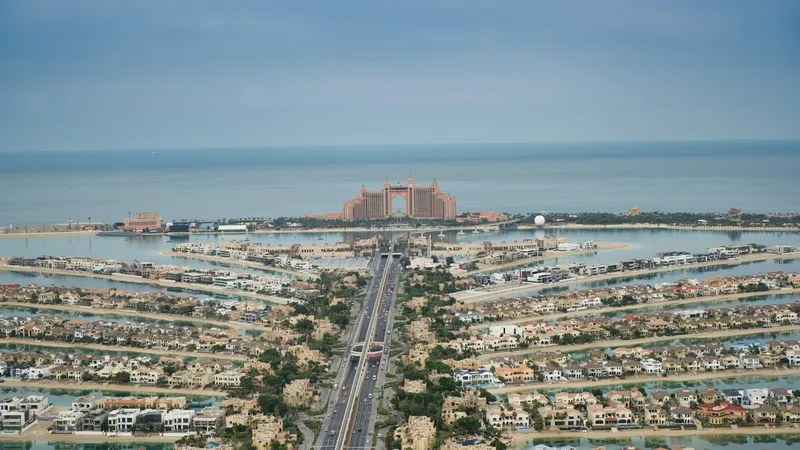
Prices have eased 5% to 15% since the end of 2025 and sales are down sharply, while the very top of the market keeps trading. A look at what the data shows, and the risks on both sides.
Read
Companies with revenue up to AED 3 million can keep electing to pay no UAE corporate tax for three more years. The relief was due to end with tax periods closing on 31 December 2026.
Read
A sole owner of completed property in Dubai can now apply for the two year property investor visa whatever the property is worth. The old AED 750,000 floor is gone; joint owners need AED 400,000 each.
ReadThis is a big decision, and there is a lot of information to take in. That is why we start with a free 15 minute call: we look at your situation and your goals, then tell you which programs genuinely fit you, and which do not. We never push one program over another. If staying where you are is your best move, we will tell you that and sell you nothing.